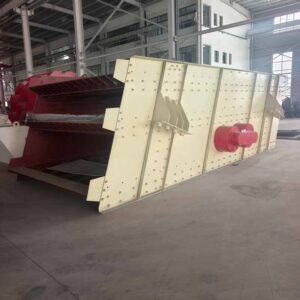
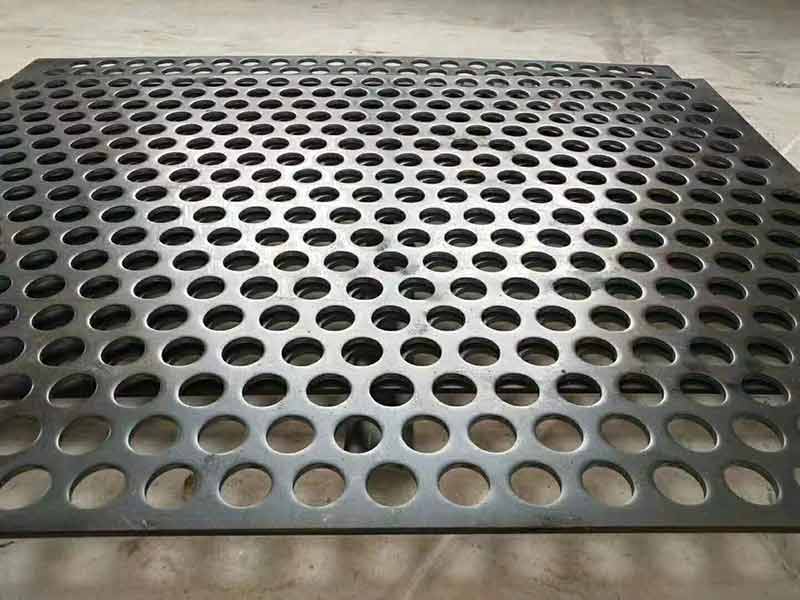
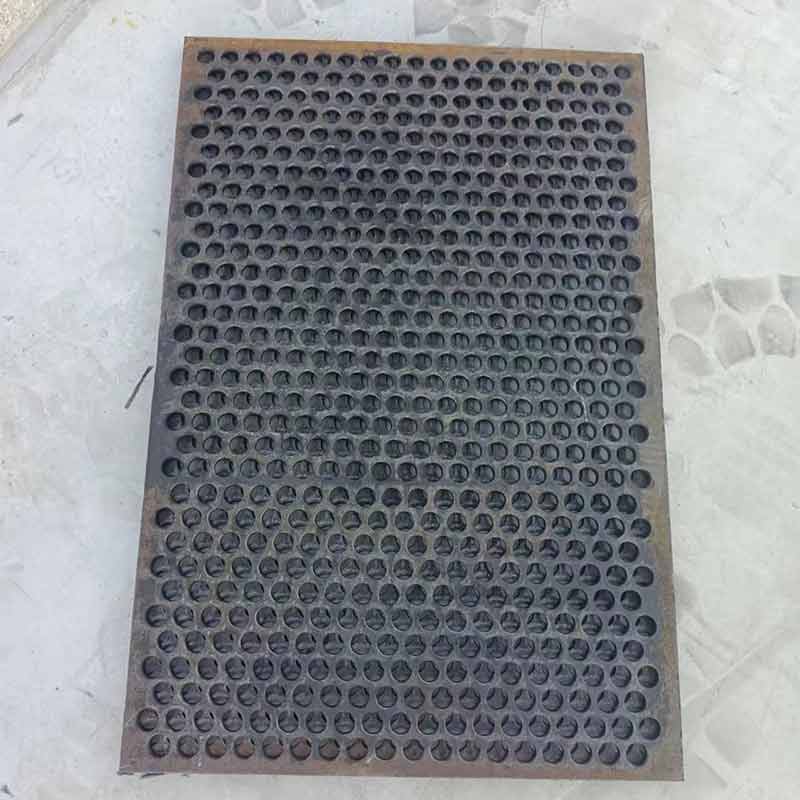
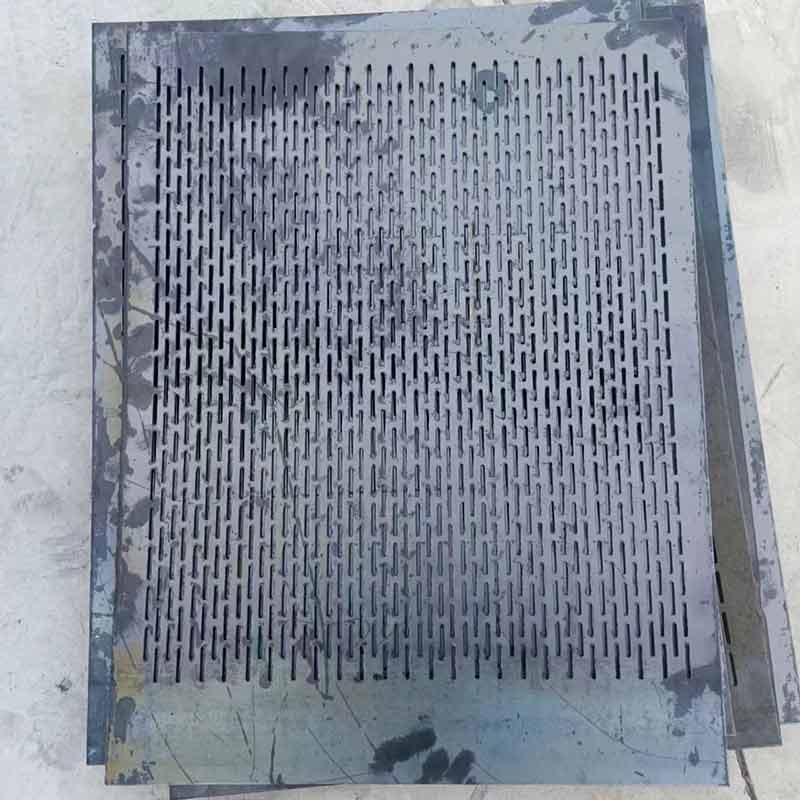
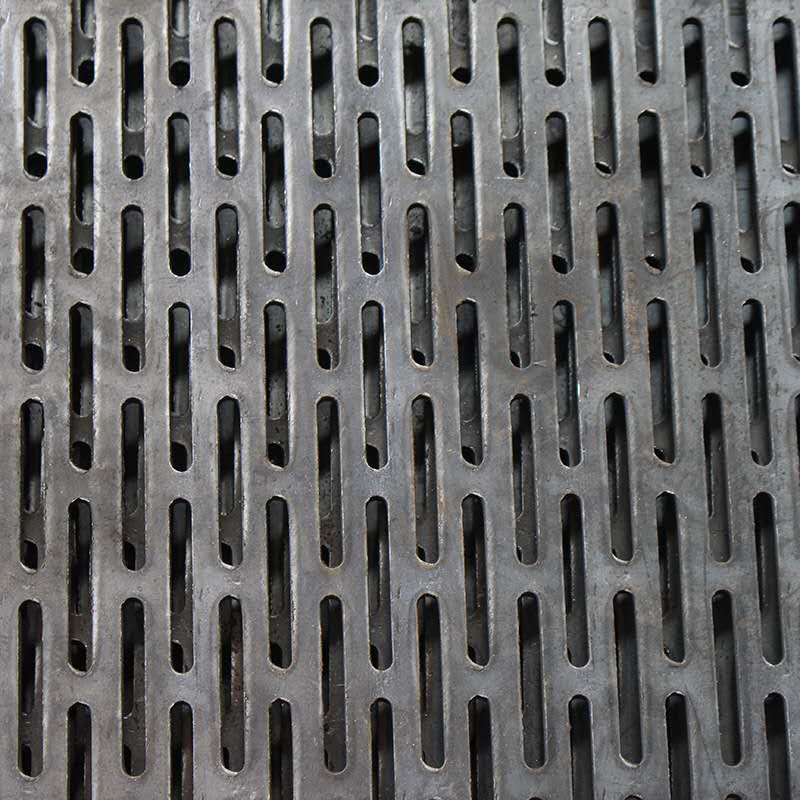
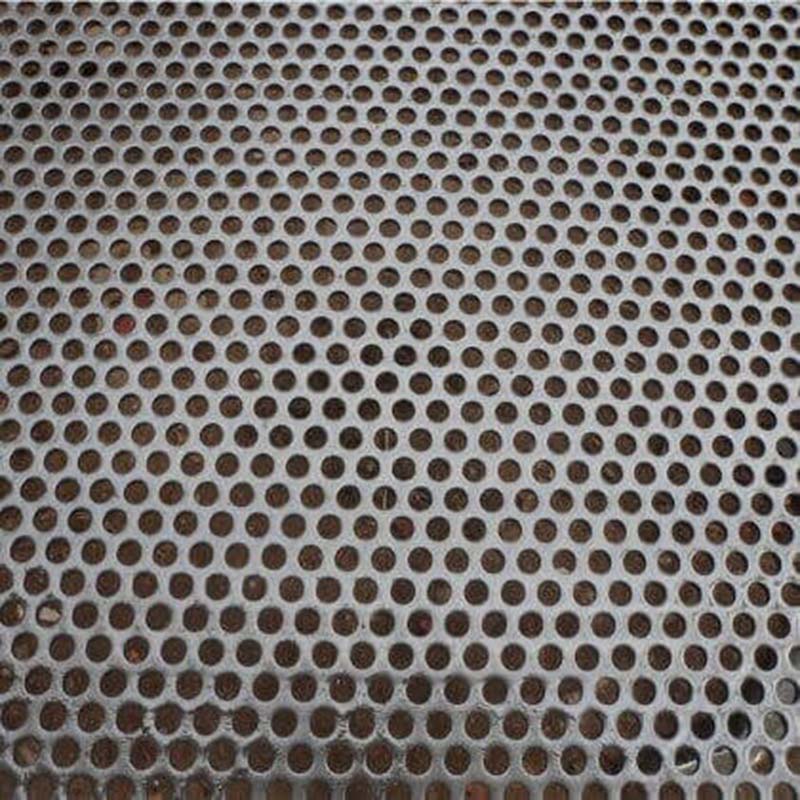


Perforated Steel Plate Mesh
Perforated Steel Plate Mesh, like woven screen’and steel plate screen, are all types of metal net products. However, they differ significantly in structure and performance, with distinct advantages and disadvantages. In terms of core advantages, first, the precision is higher. The Perforated Steel Plate Mesh are formed through CNC punching, with uniform and regular hole diameters and spacings, and a unified opening rate. The screening and filtering accuracy is far superior to that of woven screen, and there will be no screen hole deviation or deformation; second, the structure is more stable. The entire net is formed by punching a solid piece of sheet metal, without any joint gaps or looseness. It has stronger impact resistance, pressure resistance, and load-bearing capacity, is less prone to damage or deformation, and has a longer service life; third, the flatness is better. The surface of the net is smooth and flat, without burrs, providing better decorative and adaptability, and can be adapted to various precision equipment and decoration scenarios; fourth, it is easy to clean and maintain. The surface is smooth without dead corners, and dust and debris are less likely to accumulate. Cleaning is convenient, and it is suitable for scenarios with high cleanliness requirements. Its disadvantages mainly lie in poor flexibility. Compared with woven nets that can be bent and curled, the hole-punched nets are made of hard sheet metal and cannot be significantly bent. Their adaptability to irregular installation scenarios is slightly weaker; at the same time, for the same specification, the processing cost of hole-punched nets is higher, and the price is higher than that of ordinary woven nets and steel plate nets. Steel plate nets are formed by stretching and have good toughness but irregular hole shapes. Woven nets have strong flexibility but low precision and are prone to loosening. In summary, hole-punched nets are more suitable for high-precision, high-load-bearing, and high-regularity usage scenarios.