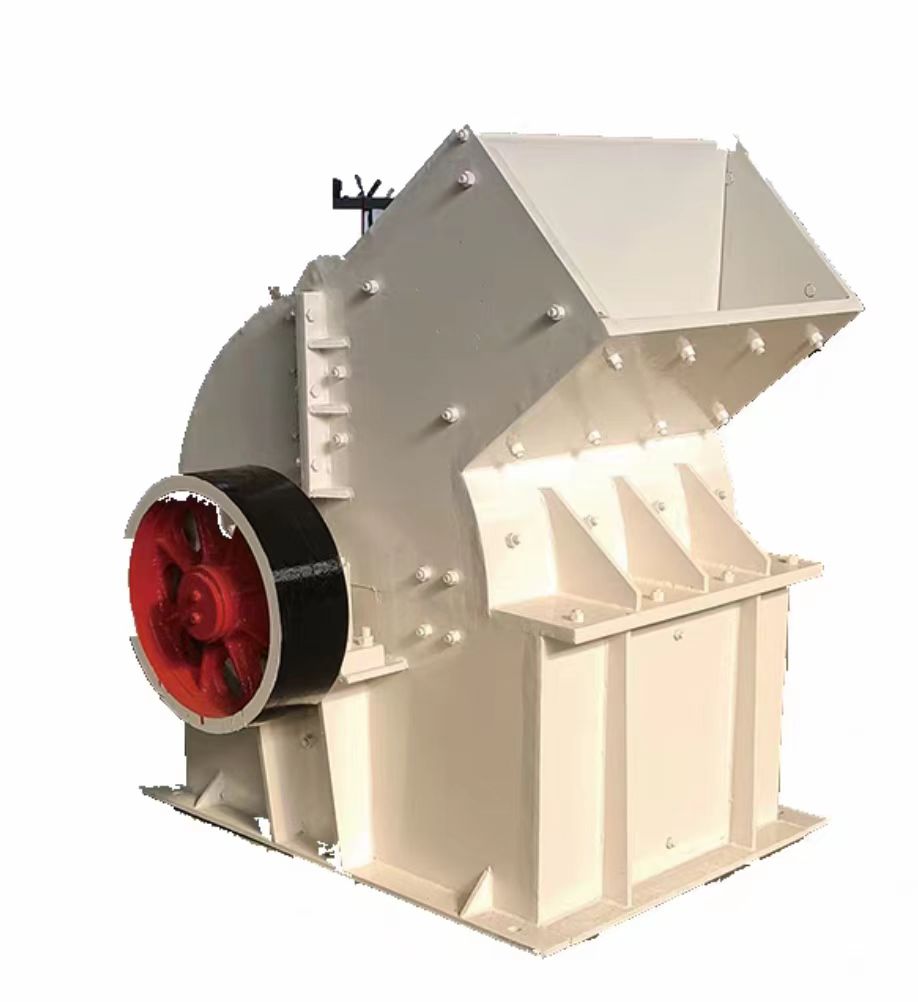
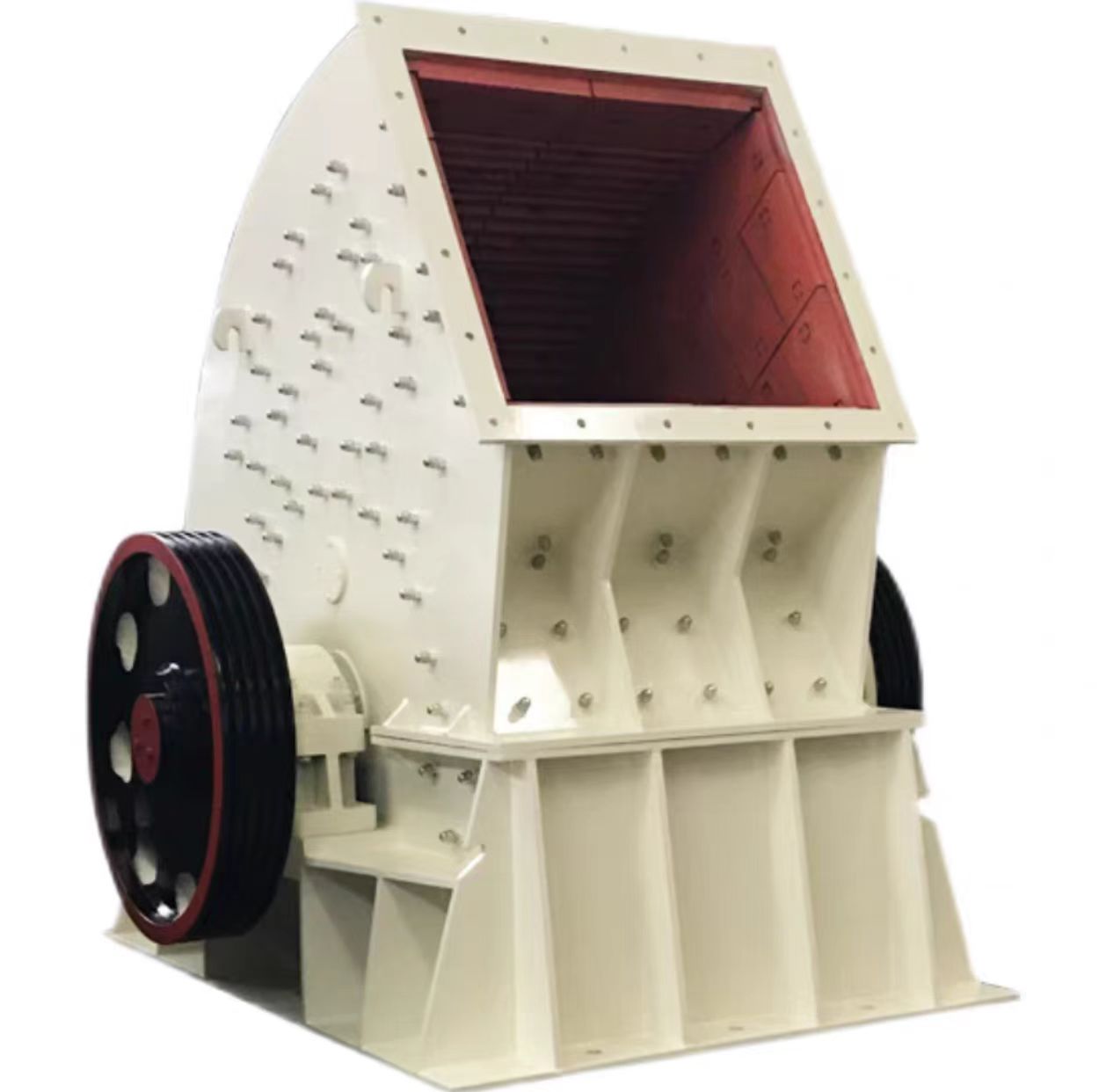


The hammer crusher is a type of equipment that breaks materials through impact, available in single-rotor and double-rotor configurations. It is used for primary crushing, directly reducing materials with a maximum size of 600–1800 mm to 25 mm or smaller. Hammer crushers are suitable for medium-hard materials in industries such as cement, chemical, power, and metallurgy, including limestone, slag, coke, coal, and other materials, performing medium and fine crushing operations.
Working Principle
Hammer crushers primarily rely on impact energy to break materials. During operation, the motor drives the rotor to rotate at high speed. Materials are fed uniformly into the crushing chamber, where rapidly rotating hammers strike, shear, and tear the material, thereby breaking it. At the same time, under the influence of gravity, the broken material is thrown from the rotating hammers against the inner baffles and screen bars. Material larger than the screen openings remains on the screen plate, continuing to be struck and ground by the hammers until it reaches the desired discharge particle size, after which it passes through the screen and exits the machine.
Main Usage
The materials to be crushed include coal, salt, chalk, gypsum, bricks, tiles, limestone, and others. It is also used for crushing fibrous materials such as wood with high elasticity and toughness, paper, or waste asbestos cement to recover asbestos fibers. In addition, hammer crushers can not only be applied in crushing and sand-making production lines, but can also replace cone crushers in mineral processing lines.